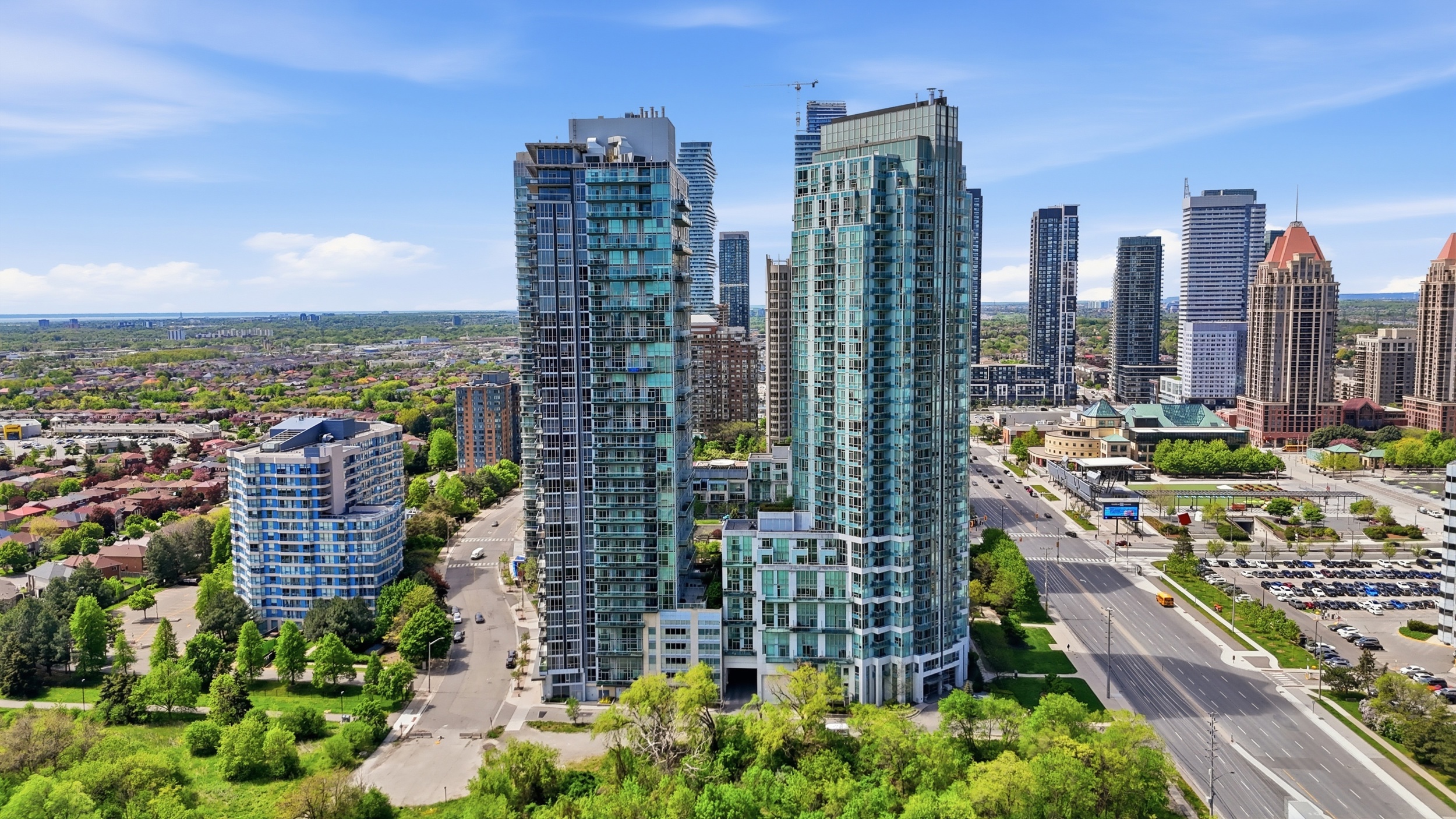
Some of the quietest exits in the GTA right now are happening in the condo market. Investors who bought Toronto condos near the 2022 peak are listing, selling at a loss, and moving on. Not because they want to. Because the math stopped working and waiting is making it worse.
What Buying a Toronto Condo in 2022 Actually Cost
The Toronto condo market peaked around early 2022. Benchmark prices for a one-bedroom in the city core were sitting above $700,000 in many buildings. Investors were buying on the assumption that prices would keep climbing, rents would cover the carry costs, and they could sell in a few years for a profit.
None of those three things played out.
Prices fell sharply from that peak and have not recovered. The average Toronto condo is now trading well below where it was in early 2022. In some buildings and unit types, the loss from peak to current list price is $100,000 to $150,000 or more. That is before you account for carrying costs paid over the last two to three years, condo fees, property taxes, and any repairs.
If you bought a condo at $720,000 in February 2022, put down 20 percent, and are now listing at $580,000, you have not just lost equity on paper. You may owe more than the sale proceeds will cover after closing costs. That is the reality a growing number of GTA condo owners are sitting with right now.
For more on how deep the condo price correction has gone, the post on why Toronto condo sellers still refuse to face reality breaks down the pricing gap in detail.
The Carrying Cost Problem Nobody Talked About Enough
Even investors who bought with a tenant in place have felt the squeeze. When interest rates jumped from under 2 percent to over 5 percent between 2022 and 2023, the monthly carrying cost on a $600,000 mortgage went up by roughly $1,500 to $1,800 a month. Rent did not move that fast. It never does.
So investors who were cash-flow neutral in 2021 were suddenly cash-flow negative by $800, $1,000, sometimes more every single month. That adds up. Two years of absorbing that shortfall means some owners have spent $20,000 or more out of pocket just to hold a unit that is now worth less than what they paid for it.
That is not a paper loss. That is real money gone.
The post on what happens when GTA condo tenants leave owners underwater covers how the tenant situation makes this even harder to unwind.
Where Some of That Capital Is Going Now
When investors exit a losing position, the money has to go somewhere. Some of it is leaving real estate entirely. But a portion of it is being redeployed into markets where the price point is lower, the carrying costs are more manageable, and the supply picture looks different.
Towns like Acton, Georgetown, and parts of Halton Hills have been picking up attention from buyers who are priced out of or disillusioned with the Toronto condo market. A detached home in Acton can still be found in the $700,000 to $850,000 range. That is roughly what a one-bedroom condo in a downtown Toronto tower was selling for at the 2022 peak, except the Acton buyer gets land, more space, and no monthly condo fee eating into their return.
Thinking about selling your home?
Get a free, no-pressure valuation from a GTA realtor who tracks this market every day.
That comparison is not lost on investors who have just spent two years watching a condo drain cash.
The supply in smaller Halton communities is also tighter relative to demand than what you see in Toronto’s condo sector, where listings have been climbing steadily. As of early 2026, Toronto condo inventory sits at elevated levels, with months of supply well above the balanced market threshold of around four to five months. Acton and surrounding areas are not seeing the same inventory overhang.
The Acton Market: A Specific Look
Acton sits inside Halton Hills, roughly 50 kilometres west of downtown Toronto. It is not a flashy market. There are no glass towers, no bidding wars making the news. What it does have is a lower entry price, freehold ownership, and a commuter profile that works for people who are not going into the office five days a week.
Freehold detached homes in Acton have been selling in a range that makes the math look different than what condo investors have been dealing with. No condo fees. No special assessments. No board meetings about crumbling parking structures. The carrying cost calculation is simpler and, for a lot of buyers, more predictable.
For a closer look at how Halton Hills has been performing and why the $1 million home price range is creating its own friction there, the post on why $1M homes in Halton Hills are harder to sell is worth reading alongside this one.
If you are thinking about what a home in this area might be worth today, you can get a current estimate at matsmoy.com/home-evaluation.html.
The Cost of Waiting It Out
One pattern that repeats in markets like this is the investor who holds on hoping for a recovery that keeps not arriving. Every month they wait, they pay another round of mortgage interest, condo fees, property taxes, and possibly management costs if the unit is tenanted.
Here is the fence around it: if a Toronto condo investor is carrying $900 a month in negative cash flow and has been doing so for 24 months, that is $21,600 already spent to hold an asset that has declined in value. If they wait another 12 months hoping for a 10 percent price recovery that does not come, they add another $10,800 to the loss column. The total out-of-pocket figure then sits north of $32,000, not counting the original equity erosion from the price drop.
That is the cost of inaction in a market that is not trending in your favour.
The Toronto condo market would need a significant and sustained demand shock to push prices back to 2022 levels. That kind of shift is not visible in the current data. Sales volumes remain soft. New listings keep rising. And the investor cohort that bought between 2020 and 2022 is still working through their exit, which means supply pressure is not going away soon.
For a broader look at how GTA sellers are pricing in this environment and what the acceptance of below-asking offers tells us, see this post on GTA sellers accepting $177K below asking.
What to Do With This Information
If you own a Toronto condo that you bought between 2020 and 2022 and the numbers are not working, the first step is understanding what it is actually worth today, not what you paid, not what you hope it will sell for. A current market valuation gives you the real starting point for any decision.
From there, the question becomes whether the gap between what you owe and what you can sell for is manageable, and whether continuing to hold is costing you more than selling and redeploying.
You can check current listings in the markets where displaced condo capital is moving at matsmoy.com/mylistings.html, and run the numbers on a different purchase at matsmoy.com/mortgage-calculator.html.
I cover the GTA market as a Realtor, and I am happy to walk through what the data looks like for your specific situation. You can reach me at blog.matsmoy.com/contact or book a 15-minute call at calendly.com/matstheagent/15min.

Sales Representative | Robbio Nicolle Real Estate Team at Real Broker Ontario
Halton Hills realtor covering Georgetown, Milton, Mississauga, and the wider GTA. Data-first, no hype. Featured on YouTube at The Market with Mats Moy with 500K+ views.